|
| POPULAR TOURS IRELAND / UK CYCLING ITALY CYCLING SPAIN CYCLING OTHER EUROPE ADVENTURES CUSTOM TOURS REQUEST |
|
Located in Ypres, Belgium, the Menin Gate Memorial is a WWI monument that commemorates the tens of thousands of fallen British and Commonwealth soldiers who were killed in the Ypres Salient and whose graves are sadly still unknown. The beautifully designed monument stands proudly at the eastern exit of the town and marks the starting point of one of the main roads that led Allied soldiers out of the town to the dangerous front line of battle.
The Menin Gate Memorial was designed by Sir Reginald Blomfield and constructed by the British government. It was officially unveiled to the public on July 24, 1927. The memorial’s infamous arch provides entry to a barrel-vaulted passage leading to a mausoleum which honors the missing. It was chosen to be a memorial because of its close proximity to the area where the battles took place. In fact, the Allied Troops would have marched right past it on their way to war. Perhaps most noteworthy is the memorial’s large Hall of Memory, which contains stone panels bearing the names of 54,896 Commonwealth soldiers who died in the Salient but whose bodies have never been found or identified.
The location of the monument, Ypres, held a very strategic position during WWI because it stood directly in the path of Germany’s planned sweep across Belgium. It was particularly important for the Allies, since it would eventually become the last major Belgian town that did not come under German control. It was the Ypres Salient, which was comprised of British, French, Canadian and Belgian armies rising up against Germany, that kept Ypres safe from German occupation. These battles, however, came at a high price. Some 300,000 soldiers lost their lives.
One of the most moving ceremonies held at the Menin Gate Memorial is known as the Last Post Ceremony. Each evening just before 8pm, traffic is stopped from passing through the gate and a troop of bugle players, members of the local volunteer Fire Brigade dressed sharply in uniform, make their way to the center of the Hall of Memory. At exactly 8pm, as stillness descends over the memorial, the buglers play Last Post, observe a moment of silence and then finish with a rendition of Reveille. Depending on when you visit, you may even witness musical bands, choirs, orchestras or even a parade honoring the fallen soldiers during the Last Post Ceremony. It is an incredibly moving tribute to the courageous sacrifices that were made here.
As with much of Europe, Belgium boasts a long, sordid history with sobering reminders of the past seemingly at every turn. The Menin Gate Memorial is one such reminder – a testament to those who went before us and made the ultimate sacrifice in their fight for freedom and a better future. It presents an excellent opportunity to take a moment and reflect, paying honor and respect to the many fallen soldiers and to help ensure that although they haven’t been identified, they did not die in vain and will never be forgotten.
Set amidst a beautiful landscape of rolling green pastures and lush gardens, and home to ancient castles, gourmet dining and endless carnivals filled with music and excitement, Belgium offers a little bit of everything to welcome travelers. This progressive little country has found a way to brilliantly combine its ancient past with the modern era, making a visit there unique and truly unforgettable. The terrain is challenging, yet inviting – perfect for passionate cyclists who want to experience a new culture while doing what they love. Here are five reasons to grab your bike and head to Belgium.
Bruges
Located in the northwest of Belgium, this historical city is sometimes referred to as the “Venice of the North” because of the network of canals that run through it. There is so much rich history in Bruges, it’s almost hard to fit it all in. In the center of the city stands the towering Belfry of Bruges, a huge ancient bell tower that has been a prominent symbol there since it was built in 1240. Visitors can climb the 366 steps to the top for an experience not to be forgotten. The town center is also host to other fascinating old buildings, such as the Church of Our Lady, the Basilica of the Holy Blood and City Hall just to name a few. Park your bike and take a leisurely boat ride through the narrow canals to get a unique view of the city’s ancient architecture.
Cuisine
Any experienced traveler knows that to truly experience another country, you must taste the local cuisine. Belgium is famous for such delectable treats as chocolate and waffles, and the old staples of beer and French fries. Beer production is large part of the Belgian economy with Anheuser-Busch, the largest brewer in the world, based there. In fact, there are over 500 brands of the bubbly beverage produced there, so get your glass ready and start sipping. When it’s time for dessert, there’s the gourmet chocolatiers of CĂ´te d’Or, Callebaut and Godiva to choose from. You’ll need to rest before your next ride to digest all the rich food and drink you’ll consume.
Tour de Flanders
Known by the locals as Ronde van Vlaanderen, this one day bike race is held in Belgium every year during the spring. The course has changed considerably over the years but has consistently started in the city of Bruges for the past decade. Part of the UCI World Tour, it’s a challenging and important race and is unique in that much of the riding is done uphill on uneven, bumpy cobblestones. If you’re visiting in the spring, consider finding a spot on the roadside to cheer on the pros; this is not a race for the faint of heart.
History buffs will be captivated by this World War I monument which is dedicated to the missing British and Commonwealth soldiers who fought and died in the Ypres Salient. Located at the eastern end of the town of Ypres, the memorial, which bears the names of some 54,896 fallen heroes, was strategically placed near one of the main roads that led the Allied soldiers to the front line. Every night at 8pm, a ceremony called the Last Post is held to allow people to pay their respects to those who gave their lives to provide the freedom that the Belgian citizens enjoy today. It’s a somber yet beautiful tribute.
The capital of Belgium, this progressive city is abuzz with excitement. Bustling with cafes, shops, museums and festivals, Brussels is a must for any travel itinerary. Its center, known as Grand Place, includes a rich variety of historical sites such as a Gothic town hall, the St. Michael and Gudula Cathedral and the Laken Castle, which boasts brilliant greenhouses filled with lush plant life. So popular is Grand Place that it’s been named a UNESCO heritage site. Art connoisseurs will enjoy visiting the Manneken Pis, a world famous sculpture that depicts a naked boy urinating into a basin. The culturally significant landmark has stood a few hundred meters from Grand Place since it was placed there in the early 1600’s. If that’s not enough to keep you intrigued, there are plenty of other activities and sites to see in Brussels, and an exhilarating nightlife for those so inclined. You’ll want to park your bike and stay a while.
Belgium is a beautiful destination for travelers of any genre, with history, culture, adventure and relaxation all rolled into one. From rolling hills to medieval castles, delicious cuisine and quaint villages, visitors are sure to leave with memories to last a lifetime. One of the best ways to experience the beauty and unique atmosphere of this country is to cycle through it. So what are you waiting for? Grab your bike and find out for yourself why Belgium is the perfect place to ride.
Founded in the year 1319, the Abbey of Monte Oliveto Maggiore is a large Benedictine monastery located in the beautiful Italian region of Tuscany. Its distinct red brick buildings offer an interesting contrast to the muted grey landscape of the Crete Senesi, meaning “Siennese clays”, for which Tuscany has become known. The Abbey is ideally situated some 273 m above sea level, not far the province of Sienna, and is surrounded by thick green forest that overlooks the breathtaking countryside below.
In 1393, construction of the monastery officially began but the process wasn’t completed until over a century later in 1526. Over the years, many of the buildings have been further modified, particularly during both the Renaissance and the Baroque periods. Today the Abbey remains a fascinating testament to the area’s rich history. It greets visitors with an imposing square tower complete with a drawbridge and a beautiful courtyard that opens up onto an avenue of cypresses. The avenue features a vibrant botanical garden and a fish pond, both of which are used for practical purposes by the monks. The garden supplies medicinal plants and the pond provides fish during times when consuming meat is forbidden.
Beyond the avenue of cypresses, the Abbey features a number of ancient structures, many built in the late 1300’s to early 1400’s. Many of these structures boast intricately carved woodwork, from inlaid choir stalls to magnificently adorned alters. The 15 century cloisters of the Abbey include two of its most noteworthy parts: the rectangular Chiostro Grande, which consists of two passages, one atop the other, and the spectacular Refectory, which features incredible frescoes by Fra’ Paolo Novelli.
The Abbey of Monte Oliveto also features a large library which houses over 40,000 volumes, pamphlets and parchments that the monks have carefully restored. Beyond the library is the pharmacy, containing an extensive collection of spice vases from the 18th century. To this day, honey and distilled herbal spirits are still produced at the Abbey, according to a number of ancient recipes. The monastery’s dispensary remained active until 1865; however modern-day visitors can still view its fascinating collection of pharmaceutical jars from the 17th and 18th centuries.
Aside from all the spectacular buildings, monuments, architectural masterpieces and historical artifacts that the Abbey boasts, many people choose to visit the monastery to experience the mesmerizing sound of the Gregorian chants of the monks who live there. Gregorian chant, which has a unique modality, attracts believers and non-believers alike and evokes images of the early the Church and an unequaled spirituality that is difficult to put into words.
Whatever the reason, a visit to the Abbey of Monte Oliveto provides a fascinating and unforgettable journey. As you cross the ancient drawbridge the atmosphere almost changes and you are embraced by the past. It’s an opportunity to experience something different. Something some locals describe as unique – an inexplicable positive energy. One thing is for certain – it’s something you must experience for yourself to truly understand. Come and discover what the Abbey of Monte Oliveto has in store for you.
The Greenways is a designated corridor of 100-year-old hiking trails stretching for 250 miles from Vienna to Prague along the Dyje River in Southern Moravia and the Vltava River Valley in Southern and Central Bohemia. It connects beautiful countryside with cultural monuments, historic towns and villages with restored castles and churches. Since much of the Czech Greenways stretches along the former Iron Curtain, where there was limited access and no development for 45 years, the countryside remained untouched and the environment clean making it the perfect destination for a multisport tour.
Begin this one-of-a-kind tour in Valtice with a short hike up the hill to the Reisten Colonnade, if you arrive early enough. Cycle most of the days visiting sites including Mikulov chateau, Jewish painter Frantisek Moritz Nagl’s memorial, and the oldest working Baroque theater in Europe. Save some energy to hike in the unspoiled beauty of Podyji National Park. You will also have the opportunity to canoe down the Vltava River.
Pure Adventure’s Vienna to Prague Multisport Tour combines cycling, hiking and canoeing in one trip! It is a great way to mix up your activities and get a different perspective by foot and on the water of the Czech landscape.
When it comes to beautiful natural landscapes, the country of Ireland certainly has its fair share. From rolling green hills to peaceful pastures and the many fascinating medieval structures found throughout the countryside, it’s no wonder this destination has found itself memorialized in so many pictures and works of art over the centuries. One of the most spectacular natural scenes to behold is the famous Cliffs of Moher. Located on the west coast, these magnificent rock formations have stood the test of time, still serving as one of the most popular points of interest in the country.
The Cliffs of Moher boast a long, rich history. Believed to have been formed an astonishing 320 million years ago, during the Carboniferous period, the Cliffs of Moher were originally the site of a gigantic river delta. The formation’s name was derived from a 1st century fort, “Mothar”, which has long since fallen into ruin but at which site a Napoleonic signal tower was constructed in its place in 1803.
What is probably most amazing to people when they witness the cliffs is their size. Rising to an incredible height of more than 700 feet, and stretching south for nearly five miles, the massive cliffs are an amazing feat of nature. They are almost completely vertical and boast an almost sheer drop into the crashing Atlantic below. The views are absolutely awe-inspiring.
At the highest point of the cliffs sits O’Brien’s Tower. It was built in 1835 by Cornelius O’Brien as an observation point for the hundreds of tourists who, even back then, made their way to the rocky edges to take in the sights. Today the tower still stands proudly as a beacon and serves as the perfect vantage point from which to witness the majestic cliffs and surrounding scenery below. O’Brien’s Tower and the Cliffs of Moher are located just a short distance from the quaint, friendly village of Doolin, famous for its traditional music. Nearby Liscannor, known for its slate flagstones once used for fencing purposes, is also a short distance away.
To add to the area’s natural beauty, the Cliffs of Moher are also home to a number of nesting seabirds. These species include the Atlantic Puffin, Razorbill, Chough and Common Gull.  In 1988 the area was officially designated as a Refuge for Fauna and as a Special Protection Area for Birds (SPA) a year later. What this means for visitors is a chance to witness some beautiful wildlife in its natural (and magnificent) environment.
Whether it’s the breathtaking views and natural wonders that inspire you, or the fascinating history of the ancient buildings and towns located nearby, a visit to the Cliffs of Moher is something not to be missed.
If you’re up for an exciting, historical journey through some of the world’s most beautiful albeit ancient scenery, the walled village of Sant Marti d’Empuries in Catalonia, Spain is the perfect destination. Nestled close to sparkling golden beaches and fascinating ancient ruins from both the Romans and Greeks who came before, there is enough history and intrigue here to fascinate even the worldliest traveler. Sant Marti d’Empuries is the perfect place to enjoy a leisurely bike ride through time. In fact, it happens to be one of the cities visited on our Costa Brava Deluxe Cycling Tour, and it’s a destination not to be missed.
One of the most interesting things about Sant Marti d’Empuries is its medieval past. In fact, the city itself is considered to be the oldest settlement in Catalonia, having been occupied since the Bronze Age, and is built in proximity to some of the oldest buildings in the area. There’s a lovely little church to visit which was constructed during the 11th century and still stands today as a testament to the area’s rich history. Enjoy breathtaking old structures and a warm, rich atmosphere that seems to have been frozen in time as you ride through the enchanting streets of the village.
Another thing that makes Sant Marti d’Empuries such a fabulous place to visit is its beautiful fine sand beaches that seem to stretch on forever. From the shores of these golden beaches you can enjoy some excellent views of the Bay of Roses and soak up some warm, glistening sun while you’re at it. It’s the perfect place to take a break, park your bike and enjoy a long, peaceful stroll amidst some of nature’s most beautiful handiwork.
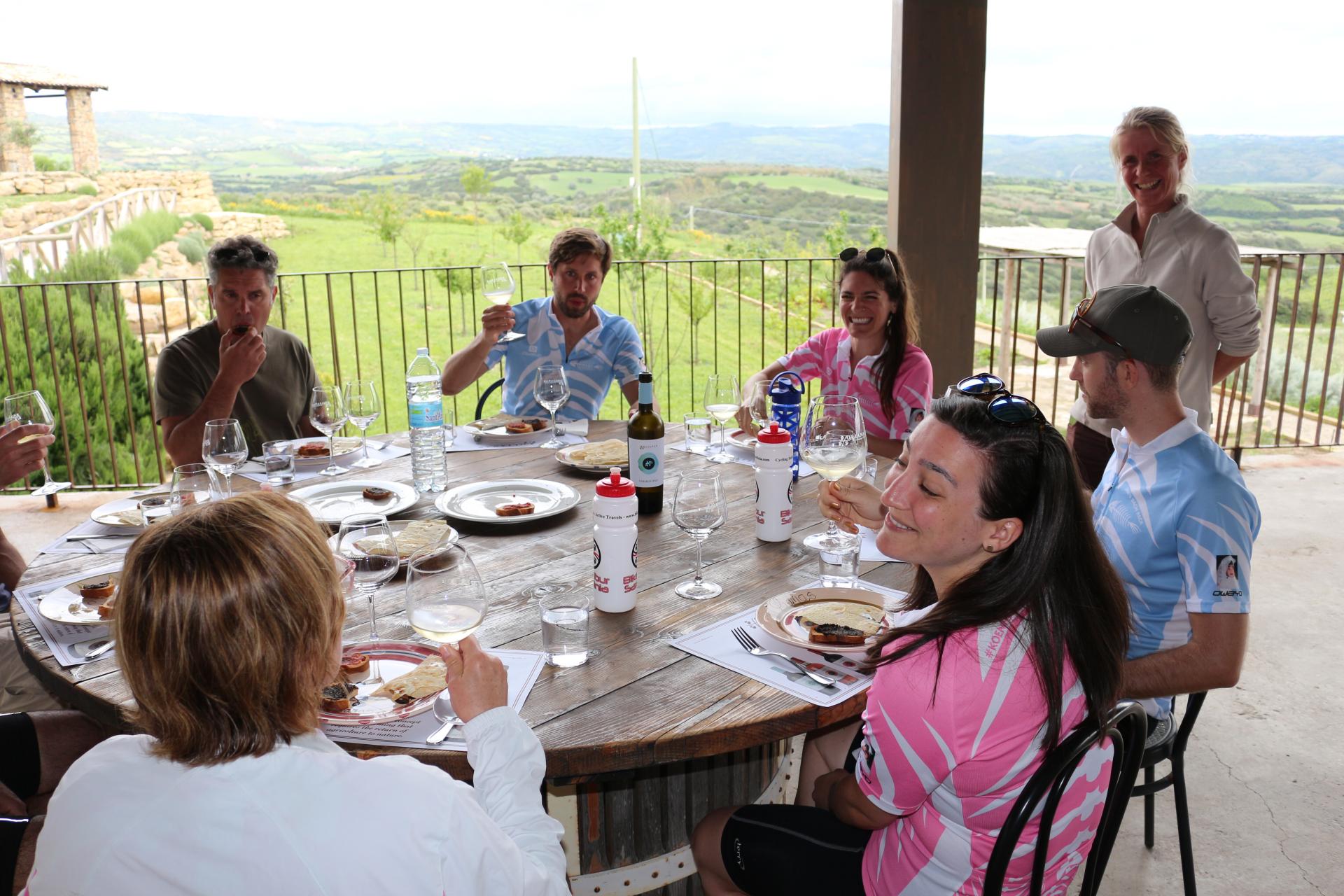
If you’ve got the time, there are plenty of charming little restaurants and beach bars to pop into and enjoy some delicious local cuisine and some of the area’s laid back, relaxed atmosphere. Don’t be fooled by the size or location – some of these quaint little haunts are so good, they draw patrons from as far as Barcelona and even France! Take a walk, sip some wine and enjoy the unique and flavorful tastes of the area as you take in the charming surroundings.
The Catalan region offers some of the most incredible and memorable places to cycle, particularly the tiny village of Sant Marti d’Empuries. With fascinating history, breathtaking scenery and a warm, welcoming atmosphere, it’s the perfect place to go to experience the area’s rich past and beautiful present as they come together perfectly. Grab your bike, hop on and join us for a journey you won’t soon forget.
You wish is our command! You wanted to ride through Tuscany visiting the famous vineyards, while also experiencing the enchanting local lifestyle of Umbria, now you can. On our new Tuscany + Umbria Cycling Tour you will enjoy all that is good: food, sun, lifestyle, wine, amusement, and relaxation! Here is a peak at what you can expect on this fantastic tour:
The tour’s highlights, Montalcino, Pienza, Orvieto, Todi, and Assisi, are nothing short of amazing. With Brunello wines, cheeses, historical sites, medieval villages at your finger tips, prepare for a complete immersion in another time and way of living! You can enjoy very charming 3/4 star accommodations and devour your choice of divine Mediterranean cuisine. Tuscany and Umbria in ONE trip…who wouldn’t want to try this tour?!
Located off the Mediterranean coast of Spain, the beautiful region of Catalonia welcomes visitors with its unique culture and warm hospitality. One of the area’s most noteworthy features is its delectable cuisine – namely the wine that is produced and served there. In fact there are 9 DO regions and 1 DOQ region boasting a variety of wines including sparkling Cava and a number of whites and reds. Of these regions, three in particular stand out amongst the others and top the list of “must-visit” places in Catalan for wine lovers.
Breathtaking nature and long, rich history are the hallmarks of this Catalan wine region, which is credited as the birthplace of cava. In fact, nearly 95% of all cava, a traditional Spanish sparkling wine in white or rose, is produced in the Penedes area.  The region can be divided into three distinct zones, each of which exhibits its own unique climate and environmental factors that lend themselves to the flavors and styles of the wines that are produced there. Penedes is the largest and most productive wine region in all of Catalonia and enjoys a highly successful business of wine exportation. This is an excellent place to experience the delicate and exquisite flavors that Spanish wine has to offer.
Priorat
If red wine happens to be your forte, the Priorat region is a definite stop on your to-do list. It is the only DOQ region in Catalonia and its production consists almost entirely of red wine varieties. The Priorat area is characterized by the unique terrain in which the grapes are grown. This terrain, made up of reddish black slate and quartz soil is referred to as llicorella. The uniqueness of the soil confers a number of special qualities into the wine and helps to keep the vines safely in the ground, protected from the volatile weather that can common to the area. The result is some of the most delectable wines found anywhere in the world.
Conca de Barbera
Conca de Barbera is a DO of Spanish wines, particularly of the white variety, produced throughout the provinces of Tarragona and Lleida in Catalonia. The area climate features hot summer days, cool nights and even colder winters – perfect for growing some spectacular crops. The vineyards of Conca de Barbera are primarily planted along river valleys and protected by the cover of nearby mountain ranges which shelter the harvests from dangerous weather and wind. If you’re a fan of white wine or light roses, you’ll enjoy the selection from Conca de Barbera, many of which feature a delicious blend of both whites and reds.
For centuries the regions of Catalonia have been at the heart of wine production, with the blends, flavors and styles produced there sought after by wine connoisseurs the world over. Today the area is still at the height of production, featuring ideal climates and conditions and age-old traditions that result in exquisite fine wines of virtually every variety. If a visit to Catalonia is in your future and wine is something you’re interested in, each of these three regions is certain to deliver the unique taste, bold personality and unforgettable experience for which Catalan wine has become known and loved.
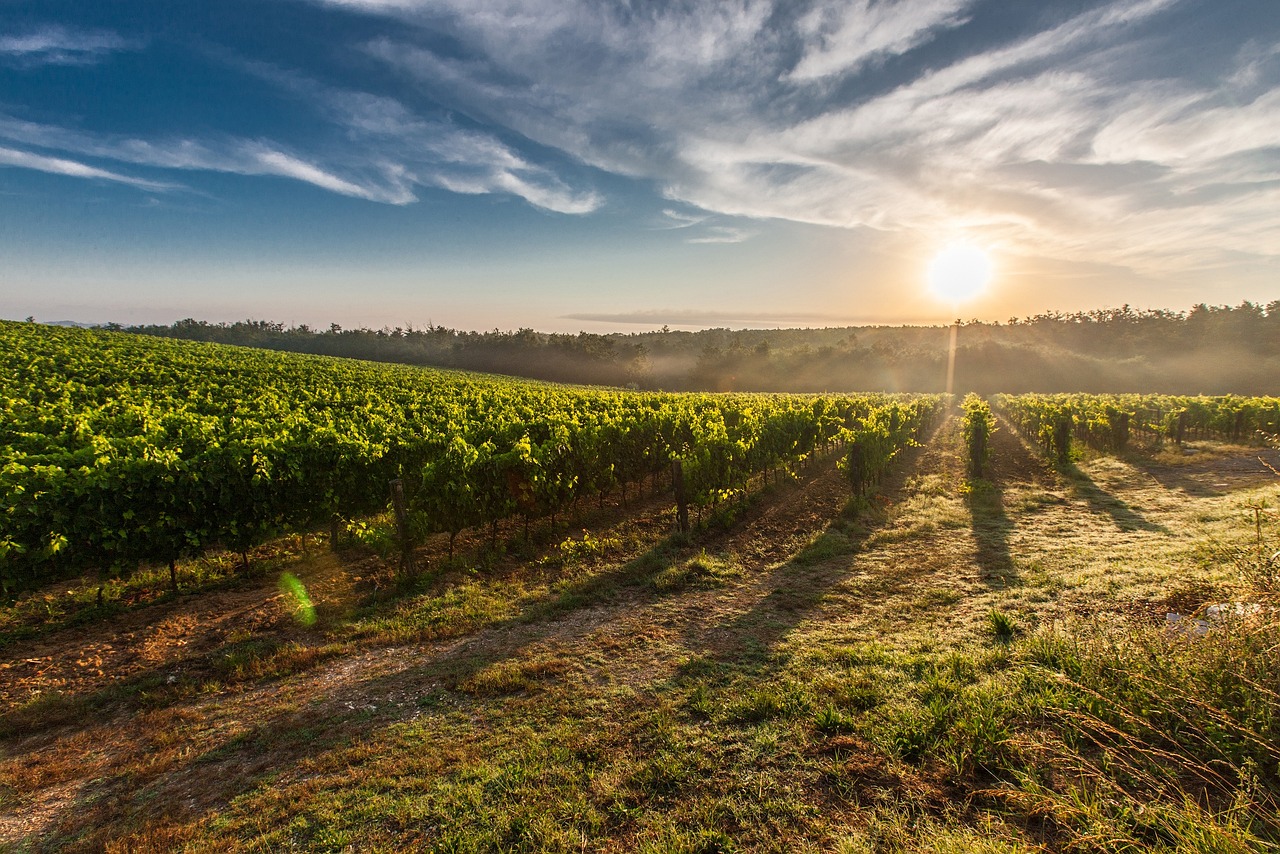
Whether you’re a wine connoisseur or simply enjoy trying new and exquisite fine wines, Brunello di Montalcino should be among the top on your must-taste list – especially if you’re planning a trip to Italy in the near future. Produced in the vineyards surrounding the town of Montalcino in the Tuscany wine region, Brunello di Montalcino is a rich red wine that is bursting with the flavors of the regional ingredient:  Sangiovese grapes. It is believed to date back as far as the 14th century and continues to be one of the greatest of all the wines found throughout Italy.
What makes Brunello di Montalcino so refined and unique is the ideal climate of the region in which it’s produced. Montalcino features one of the warmest and driest climates in Tuscany. In fact, the grapes grown there typically ripen a week before those found in other nearby towns and villages. Within Montalcino the grape crops exhibit an interesting variety of features based mainly on location and exposure to sunlight and other environmental factors. Top producers capitalize on these differences by strategically planting their crops so that they can achieve a perfect blend of the varying styles.
Given the fact that Brunello di Montalcino is produced in one relatively small area, it’s somewhat surprising that the wine itself offers a vast range in quality and complexity. This is due mostly to the rich diversity in Montalcino’s terrain. The one consistent feature, however, is the fact that Brunello di Montalcino is made 100% from Sangiovese grapes. Regulations dictate that all Brunellos must be aged for a period of 2 years in oak and then at least 4 months in a bottle before their release.
In terms of taste, Brunello di Montalcinos exhibit a rich variety of flavors including notes of black cherry, blackberry, chocolate, black raspberry and violets. Wine aficionados often compare Brunello to pinot noirs produced in Burgundy. It possesses a delightfully smooth texture and fruity character which pairs perfectly with a variety of foods, particularly cheese, red meat and game.
Brunello di Montalcino has easily become one of the most popular and sought after wines and while it can be found on tables throughout the world, nothing compares to savoring a glass of this exquisite wine in the very area in which it is produced. Its vibrant color, intense flavors and inviting characteristics reflect the very atmosphere of the Tuscany region and provide the perfect way to experience a true taste of this beautiful destination.